
When I read an article in the spring edition of Bicycling Magazine about a missing mountain biker in Wyoming who had never been found, The Unsolved Case of a Missing Mountain Biker in Wyoming my interest as a long time Search and Rescue volunteer and cyclist was piqued. I had taken part in over 100 searches, including 5 where the subjects were never found. However, in the mountains of British Columbia, we had always found missing mountain bikers.
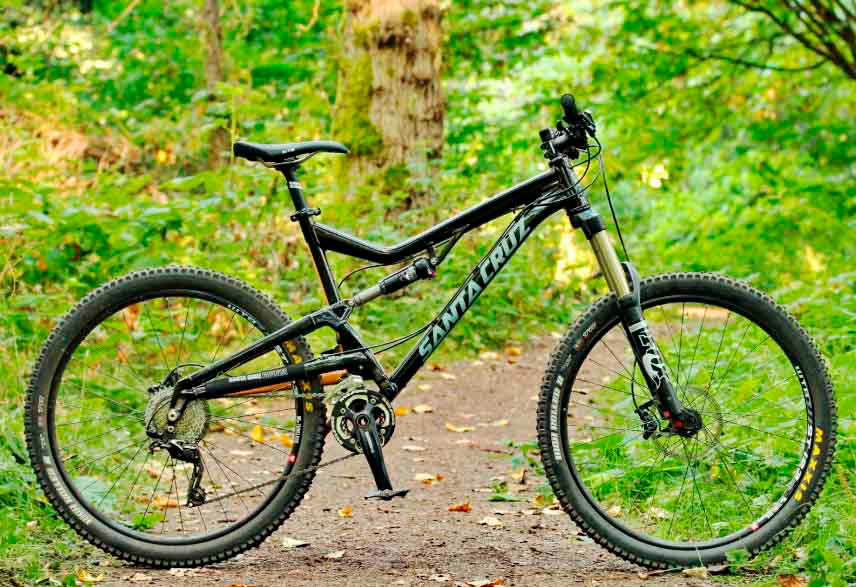
Looking further afield in Canada, I came across the strange case of Marty Leger, a 30-year old mountain biker who had disappeared after going for an afternoon ride in wild country near Halifax, Nova Scotia at end of May in 2014; 11 years later and he has not been found. The mysterious disappearance of cyclist Marty Leger in Nova Scotia — StrangeOutdoors.com From my experience, lost mountain bikers tended to be on or near trails, they didn’t just go wandering off through the bush as a hiker might. For a start it is impractical to haul a 30lb mountain bike through dense scrub. If he had abandoned his new Santa Cruz Heckler to head off through the bush, then why wasn’t the bike found either?
Superficially, the Wyoming and the Nova Scotia cases were similar but there were significant differences in the circumstances of each which made Marty Leger’s disappearance even more mysterious. Nash Quinn, in Laramie , Wyoming had had little contact with friends or family at the time of his disappearance so it was 12 days before police carried out a wellness check and found his car, phone and wallet at his home. His bike, helmet and cycling shoes were absent.

Wyoming is the least populated State in the United States and as no-one knew where Nash had gone the potential search area in the wilderness around Laramie was immense. A friend who had ridden with Nash in the past suggested potential biking areas and searchers eventually zeroed in on one area based on what Nash had been reviewing previously on his cell phone. However, there was no sign of him or his white bike and the search was suspended.

In Nova Scotia, Marty had only disappeared for an afternoon when he was reported missing the same evening. He was intending to ride for a couple of hours after work before going home to Halifax. His vehicle was found at the biking trailhead that evening. While he had left his trail map in his vehicle at the trailhead, there is cell phone cover for the area between Highway 118 and Spider Lake.

The Trail Forks app shows 17 trails sandwiched between the highway, Spider Lake and Leonard Lake in a roughly rectangular area 5km x2km. Five of the trails are rated moderate and the rest are easier. The terrain is rugged but varies in height by less than 100m and the total distance of all the trails is 19km. A search and rescue team with 20 members would have been able to walk the whole system in 3 hours but that initial search of the trails revealed nothing.
Having covered all the immediate trails, the team were perplexed. Did he ride outside the trail system or was he off trail but still in the area? They would have looked down slopes into areas he may have fallen off the trail during their rapid search so now they had to expand the overall area and conduct a grid search in the immediate trail area. A grid search is a tedious search technique that covers all the terrain between trails with searchers spaced apart in a line but close enough to see each other and, more importantly, to spot an inert person or bike. Marty’s Heckler bike was black so not an easy colour to spot in the shade of a forest.

The search continued from for 29 May to Jun 4, eventually involving hundreds of searchers including the Army. A helicopter was also employed, but over forest this would have been ineffective unless Marty was able to attract the crew’s attention or they employed heat sensors. As in Nash Quinn’s case, not a single clue associated with Marty was found. A witness later confirmed seeing him on the trail that afternoon but that was the last time anyone had seen him.

Two years later, the body of a man was found by a hunter in brush only a kilometre from the trailhead but it was not Marty. This person had disappeared a year before Marty and probably hidden himself away not intending to return. Even so, the massive search that had been centred on the trailhead had still missed this second person proving just how difficult the terrain was to search cpmpletely. But what of his bike? True it was black and hard to see in woodland but it was durable and over 5 feet in length and 3 feet high.
Having failed to find him or his bike on the trails or with a grid search, what could the search managers do? Rationally, there were only two explanations for his disappearance; either it was accidental or deliberate. In most of the searches, I was involved in, the subject was lost or injured accidentally. Where an individual intentionally aimed not to come back, they were invariably found, if not by organized searchers, by members of the public later. In Marty’s case there was no evidence he didn’t intend to go home that evening. So, he either had a sudden catastrophic accident or another party was involved.
In the 5 cases I was involved where the subjects were never found, 3 were likely accidents but two had unusual circumstances that hinted at the involvement of others. In Marty’s case, a local mountain biker had claimed that in places the trails disgorged onto logging roads that were frequented by fast-travelling pickup trucks taking revellers into the backcountry. This biker speculated a cyclist could easily be hit by a truck, and what if the driver had no intention of reporting the accident?
Other locals have mentioned the plethora of abandoned mine openings in the area from earlier gold speculators. Nowadays, the known pits are fenced off and or signed to avoid accidents, particularly those near trails. This pod cast video gives a good idea of the issue in this exact area. https://youtu.be/N6-c324wUss?si=_fNER2ylF9iS9buz Had Marty blundered into an unknown mine entrance? He certainly could have disappeared with his cycle and not been found if this was so.
When all the facts are considered, Marty’s disappearance is far more puzzling than that of Nash in Wyoming. This makes it even harder for his family to accept his loss and so, eleven years later, they are still no nearer to closure. Just how can you disappear forever on an afternoon bike ride?