
Until a few years ago this wasn’t an issue as the only motor that could provide enough power to move or even assist a cyclist was a gasolene fueled internal combustion engine. Once the engine was integrated with the frame, the machine was effectively a motorbike in most jurisdictions but, in Europe after the Second World War, bikes like the Velosolex were produced with a small auxiliary motor that was mounted above the front wheel with a friction roller that could be lowered to drive the tire. This type of machine never made inroads into Britain or North America and by the time true mopeds were introduced in the 1960s and 1970s, they were considered just low-powered motorbikes, albeit with working pedals that could move the machine if you were desperate.
However, the remarkable development of efficient lightweight batteries in the 21st Century has generated a deluge of electrically powered bikes that have been categorized differently to traditional motor bikes. The drive to promote “green” mobility with these machines, and so reduce car usage, has resulted in them being treated more benevolently by authorities than their gasolene-driven counterparts. So much so, it seems, that the definition of a motor bike has been blurred. There is no worldwide agreement on the definition of a bike with electrical motor assistance (what we term an e-bike) and a pure electric motor bike although there are some common themes.
In the European Union, Britain, Japan, Korea, Australia , South Africa and Russia e-bikes are limited to 250 Watts
The essential characteristics of a conventional bicycle are that it is powered by the rider and is relatively lightweight. Speed is mostly limited by the gradient of the road, the tire and air resistance, and the power the rider can generate to overcome these. An untrained, recreational cyclist can sustain say 100 to 150Watts for an hour, while a good club rider might put out 200 to 300Watts. An elite world class rider could maintain 400 to 500 watts, so how do these values compare with the power assistance given by e-bikes?
In the European Union, Britain, Japan, Korea, Australia , South Africa and Russia e-bikes are limited to 250 Watts but this consensus is not met in North America. Canada accepts e-bikes of up to 500Watts on the road while the USA and Mexico allow the power to be as high as 750W. On the face of it, we are giving an untrained cyclist in Canada as much power as a world class elite athlete, even before they add their own pedal power. In the USA and Mexico, the power available is completely inconsistent with the rest of the world’s interpretation of providing electrical assistance.
Fortunately, we are not seeing e-bikes whirling past us at 60kph on the cycle trails because there is also legislation in place that limits the maximum speed of e-bikes to 20mph (32kph) in both Canada and the USA. These bikes can go faster if the rider also pedals or goes downhill. In contrast, in Europe the available power is reduced from 250W when the bike reaches 30kph.
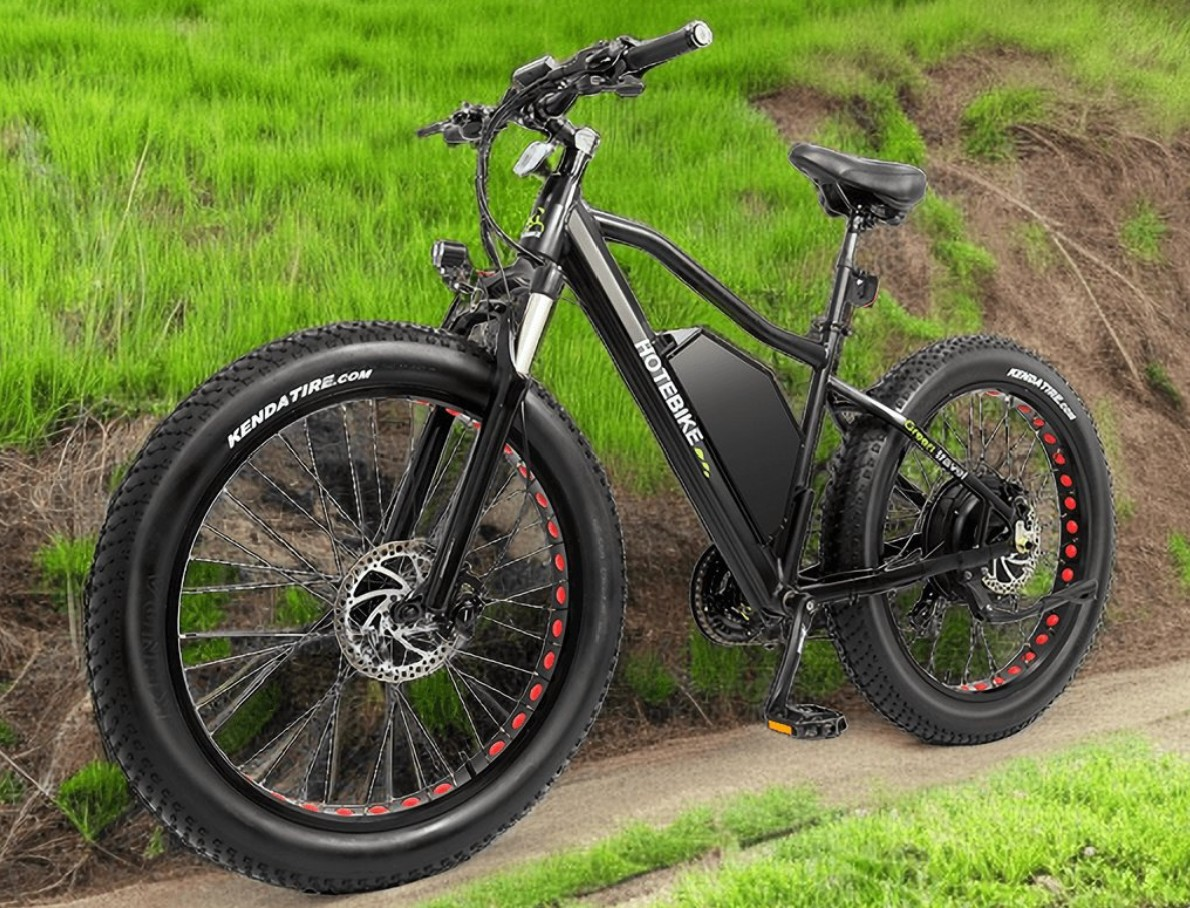
With the extra power available in North America, we do see a greater number of heavier machines such as cargo bikes, fat tire cycles and mountain bikes. In hilly and rough terrain, there is an argument for needing more power to move these machines but there is the potential problem they pose when mixing with pedestrians or lightweight cycles on mixed trails. Then there is the problem of riders using bikes intended for off road on public roads.
Bikes such as the Velotric Nomad 2 are currently being sold in Canada with 750W available power, a top speed of 45kph and a carrying capacity of 560lbs (250kg). The marketing blurb advises purchases that there may be federal or provincial regulations that limit the speed on public roads but it is up to the rider to comply. Strictly, such a bike can not legally be used on the roads here because of their power, even if ridden below 32 kph. It seems likely, though, that these machines will migrate onto our bike trails and roads around Calgary as there is no effectively way of policing them.

Is that the end of the story? Sadly, not because also sharing our bike trails are electric scooters and the phenomenally fast electric unicycle (EUC). Some of these EUCs being sold in Canada boast 3000W of power and 90kph making a total mockery of any bike regulations. In some countries, like Germany, they are illegal for use on roads, cycle paths and sidewalks, while other countries like Switzerland treat them like motor vehicles and require a licence plate and insurance. Here in Canada, we are still playing catch-up with regulation. There are no Federal controls but some provinces treat them as e-bikes with speed and or 500W power restrictions. However, here in Alberta we have not defined their status. Calgary allows them on bike paths provided they adhere to the 32kph limit.
So, when is a bike not a bike? In my mind anything that cannot be pedalled and that generates more power than an elite athlete should not be regulated as a bike. What are your thoughts?