
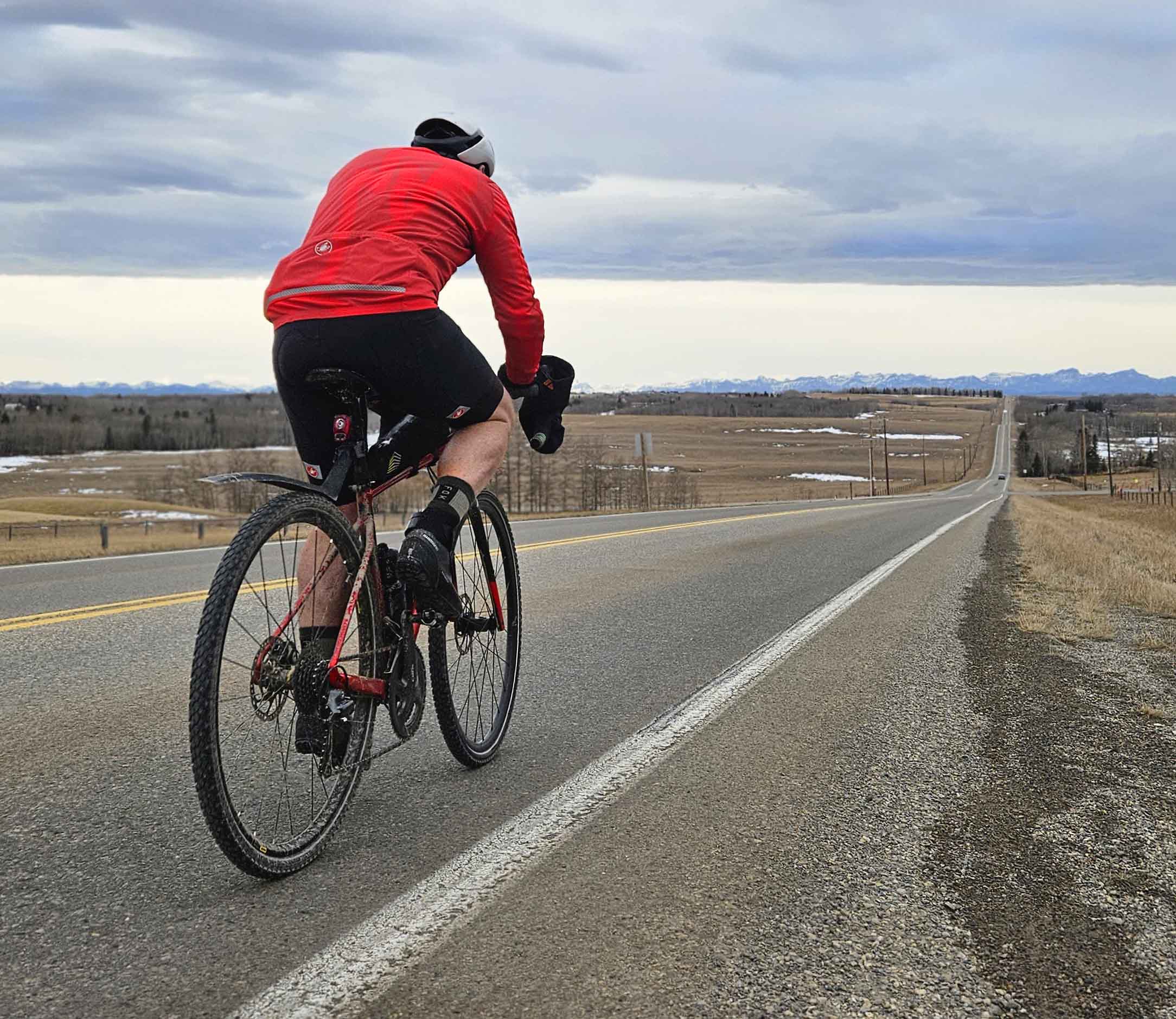
On long distance cycle journeys, there are three factors that impact your daily distance and time on the bike; hills, road surface and wind. The first two you can plan for but the third is a less-predictable variable. Three days into a ride on the Alaska Highway, I came across a cyclist stopped at the edge of the road, straddling his heavily loaded touring bike and slumped over the handlebars. In a thick German accent, the bike-packer muttered: “Its this wind, everywhere this f***ing wind!” I could offer only sympathy, as he likely hadn’t foreseen this issue when he’d planned his ride back in Europe.

As much as headwinds may be demoralizing, stretching out the riding hours and draining energy reserves, tailwinds can propel you as effectively as an electric motor. On the Yellowhead Highway near Vermillion, a prairie wind pushed me along at 40kph for only 120 Watts of effort. I arrived at my destination that day before the motel had even prepared a room for me.
In some cases, wind is more than just a hinderance or aid though. In March 2017, to celebrate a significant birthday, my twin brother flew to South Africa to take part in the Cape Town Cycle Tour, a massive cycling event with 35,000 participants. Wind was clearly going to be an issue when they set off, but not long into the ride the entrants were confronted with 100kph gusts. Riders were blown off their bikes and the decision was made to cancel the event. It was a bitter disappointment, especially for those like my brother who had flown half way round the world to participate.

Even though wind, like weather, cannot always be accurately predicted, it does follow general patterns and there are dominant wind directions which may vary with the season or even the time of day in coastal regions. I learned this the hard way riding on the flat fenland in Eastern England. The wind rose pattern for Calgary determined by Meteoblue is shown in the figure below and this largely conforms with my experience.

The dominant wind directions are westerly and southwesterly, a trend all too apparent when you have to fight your way to Cochrane against a Chinook wind in the spring (as in the banner photo). The westerly to southwesterly Chinooks are most noticeable from November to April or even May. Interestingly, there are occasions when north-northwesterly or opposing south-southeasterly winds dominate. This I can testify to as these directions align with the Bow Valley downstream of the city and Nose Creek north of the Downtown. Often, I am fighting one of these winds as I make my way along the Bow Valley Trail through Fish Creek Park or northwards up the Nose Creek Trail.
Nowadays, I always check the wind direction and any predicted changes before I set off on a long ride as it may affect my routing. Until recently, my go-to tool was the free Windfinder app that predicts wind strength and direction at 3-hour intervals throughout the day. However, occasionally, I found the 3-hour reporting periods were just too long to show rapidly changing weather.

With my new bike computer (Garmin 540), I discovered I could introduce information from third party apps and display this in a field next to power, speed and distance data. Consequently, I use Windfield to display relative wind direction and strength in kph. The wind direction arrow moves as you turn to show which vector you can expect the wind to come from at any given moment in a ride. While some may question the value of such information, I find it as valuable as knowing how steep and how long a hill climb will be. I may decide to reroute and take a more sheltered path instead of remaining exposed in the open. If you need any convincing that wind is valuable data to display, have a look at the following link. Live Wind and Weather on your Garmin // WindField 🌬️🌧️☀️ – YouTube